Group if young Latinop eople gathered on the stairs outside.
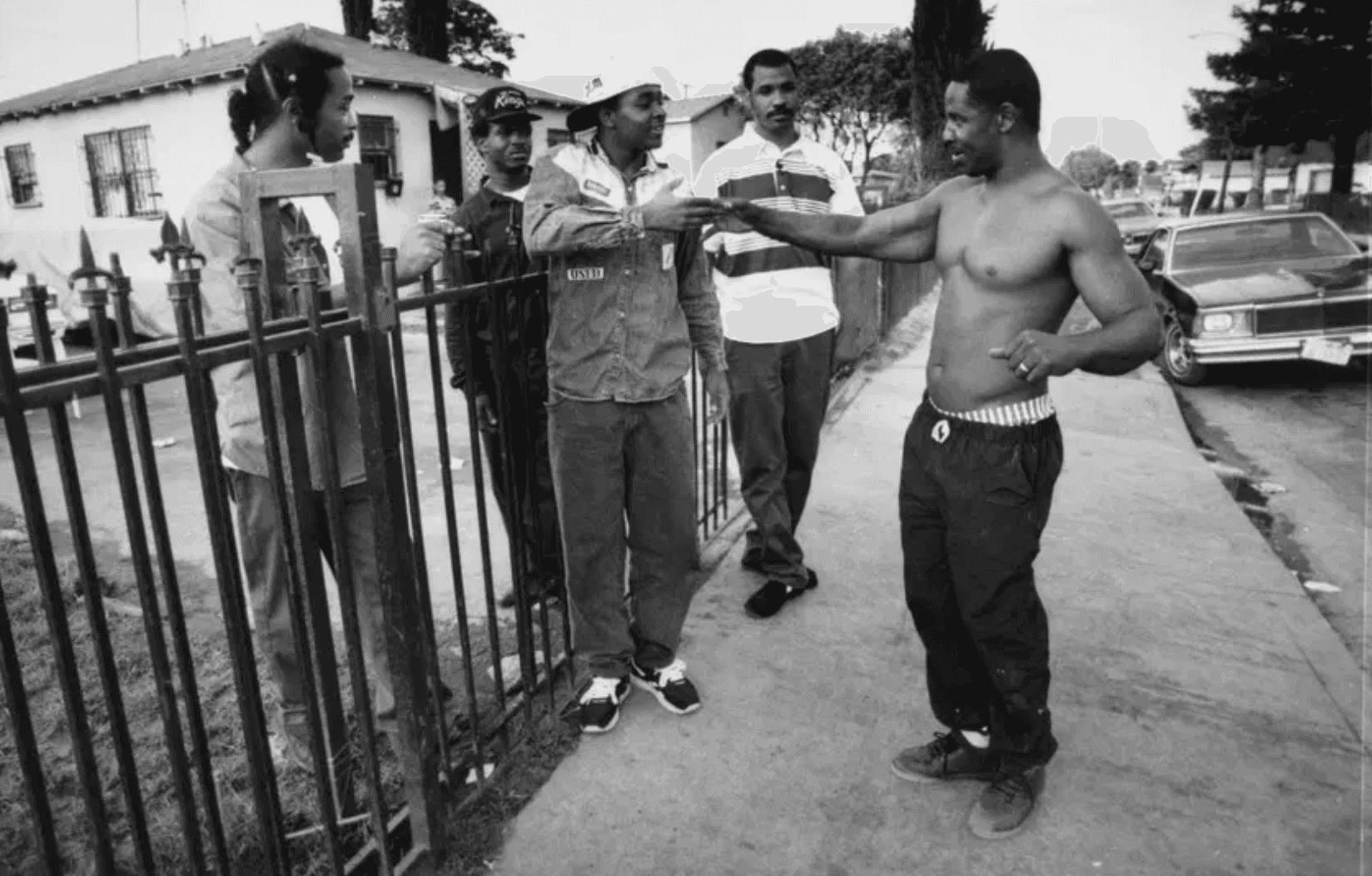
Group of young Black men hanging out together and talking.

labeled for life.

Ending the era of gang enhancements.

Scroll to continue

Group if young Latinop eople gathered on the stairs outside.
Group of young Black men hanging out together and talking.

labeled for life.

Ending the era of gang enhancements.

Scroll to continue

Group if young Latinop eople gathered on the stairs outside.
Group of young Black men hanging out together and talking.

labeled for life.

Ending the era of gang enhancements.

Scroll to continue

could you be labeled a gang member?

Take our quiz and learn if you could be labeled for life.

have you ever worn colored clothing?
have you ever publicly socialized with one or more people?
have you ever shaken someone’s hand?
do you have any tattoos?
have you ever made a post on social media?
Young Black man with back tattoo stands in front of houses with his back turned to the camera.

could you be labeled a gang member?

Take our quiz and learn if you could be labeled for life.

have you ever worn colored clothing?
have you ever publicly socialized with one or more people?
have you ever shaken someone’s hand?
do you have any tattoos?
have you ever made a post on social media?

this is a national crisis

What began as one state's experiment in criminalization is now embedded in the legal code of nearly every state in the country. These laws are broad, inconsistent, and deeply susceptible to abuse. Instead of targeting organized crime, they criminalize everyday behavior, expand police discretion, and funnel thousands of people, especially youth, into harsher, longer sentences.

from local crisis to national policy:
when stereotypes became statutes

from local crisis to national policy: when stereotypes became statutes

The notion that “gangs” are a social problem that require policing and prosecution is rooted in the tough-on-crime policies of the 1970s and 1980s—an era that cast young Black and Latino men as so-called “superpredators” and treated urban communities as threats to be contained.

gang enhancement law is born

In 1988, California enacted the Street Terrorism Enforcement and Prevention (STEP) Act, a cornerstone of the nation's "tough-on-crime" era. Under the guise of public safety, the law targeted and criminalized Black and Brown communities—especially young men in California's urban centers.

For nearly four decades, the STEP Act fueled over-policing, inflated sentences, and caused generational harm—punishing cultural identity and association instead of conduct. It became the template for gang enhancement statutes adopted across the country.

Photo credit: Joseph Rodriguez

Two police officers stand in front with their backs turned to a group of men chatting on the sidewalk.
gang enhancement law is born

In 1988, California enacted the Street Terrorism Enforcement and Prevention (STEP) Act, a cornerstone of the nation's "tough-on-crime" era. Under the guise of public safety, the law targeted and criminalized Black and Brown communities—especially young men in California's urban centers.

For nearly four decades, the STEP Act fueled over-policing, inflated sentences, and caused generational harm—punishing cultural identity and association instead of conduct. It became the template for gang enhancement statutes adopted across the country.

Photo credit: Joseph Rodriguez

Two police officers stand in front with their backs turned to a group of men chatting on the sidewalk.
gang enhancement law is born

In 1988, California enacted the Street Terrorism Enforcement and Prevention (STEP) Act, a cornerstone of the nation's "tough-on-crime" era. Under the guise of public safety, the law targeted and criminalized Black and Brown communities—especially young men in California's urban centers.

For nearly four decades, the STEP Act fueled over-policing, inflated sentences, and caused generational harm—punishing cultural identity and association instead of conduct. It became the template for gang enhancement statutes adopted across the country.

Photo credit: Joseph Rodriguez

Two police officers stand in front with their backs turned to a group of men chatting on the sidewalk.

dismantle the database

Gang databases are the engine of the enhancement system. An officer can designate someone as gang-affiliated with no evidence of criminal activity—and once they do, that label is permanent.

There is no legal process to challenge inclusion. No expiration date. Individuals are not notified when they’re added Designations can be shared with federal agencies—including ICE—and used to justify deportation, prosecution, and enhanced sentencing.

labeled in Chicago, IL

In 2018, the MacArthur Justice Center filed a lawsuit against the City of Chicago and the Chicago Police Department, revealing the staggering scope of the city’s gang database.

At the time, more than 128,000 adults were listed in the database—along with an estimated 28,000 to 68,000 children, some as young as nine years old.

The racial disparities were equally alarming. Of the 128,000 adults listed, 70% were Black and 25% were Latino.

Barton, Bill. “Devastating Consequences of Chicago Gang Database – And No Way to Be Removed.” Criminal Legal News, August 2020. Lawsuit

labeled in New York, NY

In 2018, The New York Police Department’s secret gang database had more than 18,000 entries, including over 1,400 children, some as young as 13 years old.

According to reporting by The Intercept, the database “continues to be composed
almost entirely of people of color,” with white individuals accounting for just 1% of those listed.

While New York State does not currently have a state-level gang enhancement statute, that distinction offers little protection in practice. In New York City, most alleged gang cases are prosecuted federally, where prosecutors can apply the federal gang enhancement alongside the Racketeer Influenced and Corrupt Organizations Act (RICO), which dramatically increases potential penalties and expands criminal liability.

Pinto, Nick. “NYPD Added Nearly 2,500 New People to Its Gang Database in the Last Year.” The Intercept, June 28, 2019.

labeled in California

According to the 2024 CalGang Database Report, California’s gang database contains 13,691 entries including 180 children between the ages of 13 and 17.

The racial disparities are overwhelming.
Latinos make up more than 69% of the database, and Black individuals account for nearly 29%.
 
These figures come after major reforms were implemented in response to a 2016 state audit that exposed systemic failures in the database’s oversight and accuracy. The audit found that
42 infants under the age of one had been entered into the database including 28 babies whom officers claimed had “admitted” to being gang members.

The investigation also found that individuals were routinely added to the database without sufficient evidence, and records were not being properly purged. It further revealed that the database was unlawfully used as an employment screening tool and that officers failed to notify parents or guardians when minors were added.

Although reforms were enacted after the audit, the database continues to raise serious concerns about racial bias, due process, and the long-term consequences of being labeled a gang member.

California Department of Justice, Attorney General’s Annual Report on CalGang for 2024 (Sacramento: Office of the Attorney General, 2024). CalGang 2024 Report + 2016 Audit

real people, real consequences

Behind every data point is a story. The gang enhancement system is not abstract — it’s about people whose lives have been upended by arbitrary labels and predatory prosecutions. Read their stories.

"I was swept up in a federal gang sweep due to my childhood interactions with my friends."
"There are no protections, you are entered into this database, you're not told…"
"Having that gang label on you in the prison system means more lockdown time…"
Young man sitting on steps in NYC.

K. Lewis, New York

Lewis had a bright future ahead of him. At 22 years old, he was attending graduate school to earn his Master’s Degree in Criminal Justice with the hopes of becoming a lawyer. Late one night, while Lewis and his son were asleep in his campus apartment, federal agents raided his home. To his surprise, Lewis had been included in a sweeping federal gang indictment that charged 120 people, including many of his childhood friends from the Bronx neighborhood where he grew up.

It didn’t matter that Lewis was attending graduate school, had no criminal record, and was not accused of committing a specific crime. Police labeled him and his childhood friends as gang members based on social media posts, music videos, and illegal wiretaps.

In Lewis’ words: “I was swept up in a federal gang sweep due to my childhood interactions with my friends. I had no criminal record and I was in grad school when they came for me. I had one more semester left to [graduate]. I spent 22 months in jail, and I don’t believe that sitting in jail with no criminal record and no evidence of a crime due to a database is right. I shouldn’t be in the same facility as El Chapo. I feel as though my rights were violated.”

Lewis was ultimately sentenced to time served (22 months in jail) and 12 years of probation after a federal judge rejected the 5-year plea agreement prosecutors had pressured him to accept. But his dreams of higher education have been derailed, and he has struggled to find employment since his incarceration. 

Of the 120 people indicted alongside Lewis, 115 accepted plea agreements.

As Lewis reflects: “If I throw up a sign, does that mean I just killed somebody? Does that mean I sold 200 pounds? If I chill with this person, and he chills with that person, and we chill together, that means to them (police) that we are a crew. And if he commits a crime, we are all responsible for it, whether we knew he did it or not, because we’re all together. That’s not right, that’s not fair.”

Young man sitting on steps in NYC.

K. Lewis, New York

Lewis had a bright future ahead of him. At 22 years old, he was attending graduate school to earn his Master’s Degree in Criminal Justice with the hopes of becoming a lawyer. Late one night, while Lewis and his son were asleep in his campus apartment, federal agents raided his home. To his surprise, Lewis had been included in a sweeping federal gang indictment that charged 120 people, including many of his childhood friends from the Bronx neighborhood where he grew up.

It didn’t matter that Lewis was attending graduate school, had no criminal record, and was not accused of committing a specific crime. Police labeled him and his childhood friends as gang members based on social media posts, music videos, and illegal wiretaps.

In Lewis’ words: “I was swept up in a federal gang sweep due to my childhood interactions with my friends. I had no criminal record and I was in grad school when they came for me. I had one more semester left to [graduate]. I spent 22 months in jail, and I don’t believe that sitting in jail with no criminal record and no evidence of a crime due to a database is right. I shouldn’t be in the same facility as El Chapo. I feel as though my rights were violated.”

Lewis was ultimately sentenced to time served (22 months in jail) and 12 years of probation after a federal judge rejected the 5-year plea agreement prosecutors had pressured him to accept. But his dreams of higher education have been derailed, and he has struggled to find employment since his incarceration. 

Of the 120 people indicted alongside Lewis, 115 accepted plea agreements.

As Lewis reflects: “If I throw up a sign, does that mean I just killed somebody? Does that mean I sold 200 pounds? If I chill with this person, and he chills with that person, and we chill together, that means to them (police) that we are a crew. And if he commits a crime, we are all responsible for it, whether we knew he did it or not, because we’re all together. That’s not right, that’s not fair.”

Two people arms interlocked in a handshake, both with tattoos on their arms
Young Black man with tattoo on his back

end punishment by association

Gang enhancements were built on fear, not evidence—and they continue to criminalize people based on identity, proximity, and perception rather than conduct. Here are some ways you can support our efforts below.

why gang enhancements must end

Explore our advocacy toolkit for more information on the details of gang enhancement laws and why repeal is urgently needed.

why gang enhancements must end

Explore our advocacy toolkit for more information on the details of gang enhancement laws and why repeal is urgently needed.

why gang enhancements must end

Explore our advocacy toolkit for more information on the details of gang enhancement laws and why repeal is urgently needed.

spread the word

Grab our toolkit and share with those in your community. Be a part of the movement.

spread the word

Grab our toolkit and share with those in your community. Be a part of the movement.

spread the word

Grab our toolkit and share with those in your community. Be a part of the movement.

join our coalition

Get involved with the movement to end gang enhancements today.

join our coalition

Get involved with the movement to end gang enhancements today.

join our coalition

Get involved with the movement to end gang enhancements today.

labeled for life.

Labeled for Life is fighting for the full repeal of gang enhancement laws—not reform. Because no one should face decades behind bars for a label that never should have existed in the first place.

© 2026 Campaign Zero. All Rights Reserved.

labeled for life.

Labeled for Life is fighting for the full repeal of gang enhancement laws—not reform. Because no one should face decades behind bars for a label that never should have existed in the first place.

© 2026 Campaign Zero. All Rights Reserved.

labeled for life.

Labeled for Life is fighting for the full repeal of gang enhancement laws—not reform. Because no one should face decades behind bars for a label that never should have existed in the first place.

© 2026 Campaign Zero. All Rights Reserved.